

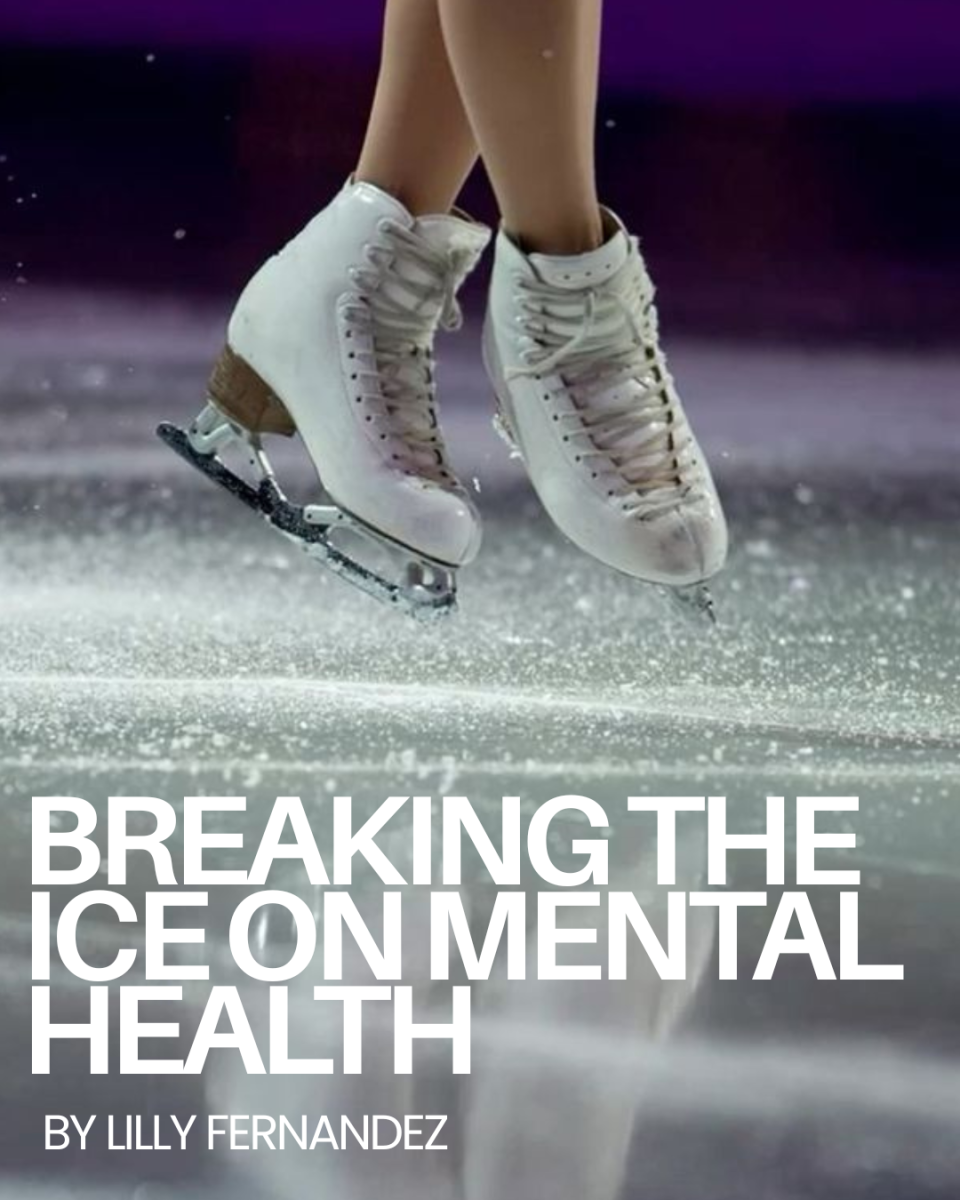
For many members of the United States Olympic figure skating team, their greatest challenges aren’t landing difficult jumps or perfecting their routines, it’s finding a way to manage the mental pressure that comes with competing at high levels.
Next to ice hockey and snowboarding, figure skating is one of the most watched Winter Olympic events year after year. A sport that mixes intense athleticism, gracefully fluid movements and tricks that would otherwise be impossible to perform is bound to draw in attention from the world, but beneath the impressive wins and gold medals lies an intense pressure that is impossible for the athletes to ignore.
In 2024, it was recorded that one in seven 10-19 year olds experience mental health disorders, which accounts for 15% of the diseases this age group faces in America. With the average retirement age for figure skaters being around 25-27 it’s not hard to deduce that figure skating is a sport largely dominated by adolescents and with such a large population of teenagers competing at the national level, figure skating comes with its own set of unique struggles.
On Friday, Feb. 13, Ilia Malinin took the ice for the men’s free skate, eager to show off his skills and win himself that much anticipated gold medal. The results however, were shocking. As the music swelled and his routine began, the 21-year old skater seemed to be on track for gold after landing a clean quad flip for his opening trick. But it didn’t take long for the performance to fall apart drastically. His next jump was supposed to be a quad axel, something the self proclaimed “Quad God” is known for, but he faltered upon landing and only received points for a single axel. The mistakes piled up from there. His next trick, the quad lutz, resulted in a fall and when he tried to salvage himself some points by attempting to pull off another quad, he fell again. All of his mistakes combined dropped Malinin down to 8th place and the gold medal was lost to Kazakhstan’s Mikhail Shaidorov.
As Malinin got off the ice, fans couldn’t believe it. How could the Olympic favorite deliver such an out of character performance? For a skater who presents the media with confidence, the results didn’t feel possible. NBC’s Andrea Joyce approached Malinin after his performance and asked for his thoughts on what had just happened. The skater replied with, “I blew it.” Followed by, “I just felt like all the traumatic moments of my life really just started flooding my head, there were just so many negative thoughts that flooded in there, and I just did not handle it.”
Figure skating demands so much. Waking up at 4 a.m or earlier for practice, strict diets, and even stricter expectations, teenagers and young adults on the ice are sure to face struggles that will last them a lifetime.
But amid these mental hardships, U.S Figure Skating has made great strides in improving the way mental care is handled for athletes.
Figure skating as a sport has come a long way since the infamous knee bashing incident of 1994, born from harsh beauty standards and class conflict between Tonya Harding and Nancy Kerrigan. But there’s still work to be done.
The U.S Figure Skating website now has a specific section with mental health resources and the United States Olympic & Paralympic Committee (USOPC) now offers confidential counseling services for athletes.
Gold medalist, Alysa Liu even showed off how far mental health has come in the figure skating industry by returning to the ice on her own terms, and winning gold with a smile on her face.
For years, figure skating rewarded only perfection and physical prowess but Team USA’s athletes are proving that strength no longer needs to be measured in the color of your medal but in your happiness and mental well being.